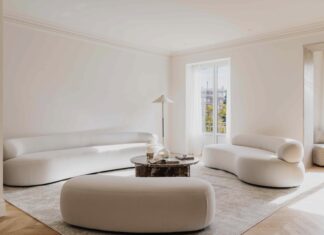





Does your living space feel overwhelming? If every surface in your home is covered with miscellaneous items, you aren’t just dealing with physical mess—you are dealing with visual noise. This constant sensory input can increase stress levels and make a room feel much smaller than it actually is.
While a deep clean is the ultimate solution, it isn’t always practical or immediate. Whether you are preparing for unexpected guests, staging a home for sale, or simply need a mental reset, professional organizer Danica Carson suggests several high-impact strategies to make a room look instantly more organized without a full-scale decluttering session.
1. Use Trays to Create “Intentional” Groups
It may seem counterintuitive to add an object (a tray) to a cluttered space, but it is one of the most effective ways to manage small items.
– The Logic: Instead of having five separate items scattered across a counter, placing them on a single tray unifies them.
– The Result: This transforms “random stuff” into a “curated collection,” reducing the visual stimulation your brain has to process. This works exceptionally well on kitchen islands and bathroom vanities.
2. The 10-Minute Surface Reset
Flat surfaces—tables, shelves, and countertops—are the primary culprits of a cluttered appearance. To reclaim these spaces quickly:
– Set a timer for 10 minutes.
– Focus solely on clearing surfaces by returning items to their designated homes.
– Put away small appliances, move clean dishes to cabinets, and hang bags on hooks.
– Why it works: Increasing the amount of visible “empty” space on floors and counters instantly makes a room feel more expansive and airy.
3. Manage “Cable Chaos”
Nothing creates visual disorder faster than a tangle of black wires and power cords snaking across a desk or floor.
– The Fix: Use docking stations with multiple slots to keep devices organized and charging in one spot.
– The Goal: By hiding or consolidating wires, you remove the “visual noise” that makes an otherwise tidy room look messy.
4. Prioritize Scale Over Quantity
A common decorating mistake is trying to fill a space by adding more small objects. This often leads to a fragmented, messy look.
– The Strategy: Swap several small, disparate items for one large, impactful piece.
– The Benefit: Larger objects provide a sense of completion and stability to a room, whereas a collection of tiny items tends to look like unfinished clutter.
5. Minimize Text-Heavy Decor
The human brain is biologically programmed to read text. When you have multiple signs, decals, or items with words on them, your eyes are constantly pulled toward them.
– The Tip: Reduce the number of “wordy” accessories in a room.
– The Result: By limiting text-based decor, you reduce the cognitive load on your brain, allowing the room to feel more peaceful.
6. Implement a “Go Back” Box System
One of the biggest causes of clutter is “transit mess”—items that belong on a different floor of the house.
– The Method: Place a dedicated “go back” box on every level of your home.
– The Process: If you find something downstairs that belongs upstairs, don’t walk it up immediately; put it in the box. Periodically (once a day or a few times a week), take the box to the appropriate floor and distribute the items.
– Why it works: This prevents the constant interruption of moving between floors while ensuring items don’t end up living in the wrong rooms.
7. Leverage the Power of Neutrals
Color plays a massive role in how we perceive space. High-contrast, clashing colors compete for your attention and can make a room feel “busy.”
– The Approach: Stick to a cohesive, neutral color scheme for larger elements.
– The Detail: Use different tones and textures within a single color family to create depth. You can still use pops of color for accent pieces, but a unified palette helps the eye glide over the room rather than jumping from one bright spot to another.
Conclusion
Reducing clutter isn’t always about throwing things away; often, it is about managing how those things are presented. By grouping items, managing cords, and choosing a cohesive color palette, you can transform a chaotic room into a calm, intentional space in minutes.