

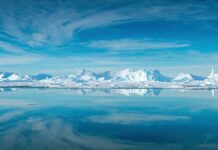



The Earth’s polar regions – the Arctic and Antarctica – are not just remote, icy landscapes; they are critical components of global climate regulation, influencing weather patterns, sea levels, and ecosystems worldwide. While both areas share extreme cold, they differ significantly in geography and governance. Understanding these differences is vital, as changes in either region have far-reaching consequences.
The Arctic: A Frozen Ocean Surrounded by Land
The Arctic, centered on the Arctic Ocean, is characterized by shifting pack ice and seasonal sea ice. Unlike Antarctica, it’s an ocean surrounded by landmasses, including parts of Canada, Greenland, Russia, and Alaska. This geography makes the Arctic particularly vulnerable to climate change.
Arctic amplification – the phenomenon where the Arctic warms faster than other regions – is driven by ice albedo feedback. As temperatures rise, sea ice melts, exposing darker ocean water that absorbs more sunlight, accelerating warming further. This melting also contributes to rising sea levels and can disrupt major ocean currents like those in the North Atlantic.
Despite the harsh conditions, the Arctic supports unique wildlife, including polar bears and Arctic foxes, and is subject to increasing international cooperation through the Arctic Council, which addresses issues from resource management to environmental protection.
Antarctica: A Frozen Continent Surrounded by Ocean
In contrast to the Arctic, Antarctica is a landmass covered by thick ice sheets, surrounded by the Southern Ocean. The Antarctic Peninsula has experienced particularly strong warming trends, and the continent’s unique position drives powerful ocean currents near the Antarctic Convergence.
Antarctic sea ice expands dramatically in winter, creating a ring of pack ice around the continent. This ice is critical for supporting marine ecosystems, including seals and penguins, which depend on stable ice conditions.
Governance and International Cooperation
Governance in the polar regions differs drastically. Antarctica is governed by the Antarctic Treaty System, which designates the continent for peaceful scientific research, prohibits military activity, and restricts mineral resource exploitation. No single nation controls Antarctica, fostering international collaboration.
The Arctic, however, falls under the jurisdiction of nations with territory within the Arctic Circle. As sea ice declines, interest in shipping routes and natural resources is increasing, raising geopolitical considerations.
The polar regions are not merely isolated environments; they are interconnected with the global climate system, and their future stability is critical for the well-being of the planet.
Changes in these regions will continue to reshape global weather patterns, sea levels, and ecosystems, demanding continued monitoring and international cooperation.