



Doors are often overlooked, but their position, design, and even how often they’re opened can dramatically impact how air moves through a building. Ignoring this can lead to stuffy rooms, condensation, and inefficient heating or cooling.
The Underestimated Role of Doors
Most people assume ventilation relies solely on windows, but doors act like valves in a building’s airflow network. Understanding how they influence air movement is crucial for creating comfortable, healthy indoor spaces. Many common indoor air problems aren’t caused by a lack of openings, but by doors that disrupt natural ventilation.
Why Door Position Matters
Air moves due to pressure differences, whether from wind, temperature changes, or mechanical systems. For effective airflow, there must be a clear path between entry and exit points – and doors often sit right in the middle of those paths.
Fully closed, airtight doors create isolated rooms. Fresh air can’t reach deeper spaces, and stale air can’t escape. Conversely, well-placed doors allow controlled airflow, supporting both natural and mechanical ventilation. Unlike windows, doors are opened and closed frequently, making their impact dynamic and dependent on how people use them.
The Importance of Door Undercuts
The gap between the bottom of a door and the floor (the “undercut”) is one of the most critical details. This gap allows air to pass even when the door is closed. In rooms without direct ventilation, like bedrooms or bathrooms, undercuts are often the only way for air to move.
Too small or blocked undercuts (by carpets or door sweeps) stop airflow entirely. This leads to pressure imbalances, poor ventilation, and increased humidity. Properly sized undercuts allow continuous airflow without sacrificing privacy.
Balancing Pressure Between Rooms
Each room develops its own air pressure based on temperature, occupancy, and ventilation. Doors regulate how these pressures equalize. For example, a bathroom with an exhaust fan operates under negative pressure. An airtight door prevents fresh air from entering, reducing the fan’s effectiveness. A door with an undercut allows easy airflow, improving ventilation performance.
Similarly, air-conditioned rooms need return air paths. Closed doors trap conditioned air, reducing cooling efficiency and increasing energy use.
Door Alignment and Natural Ventilation
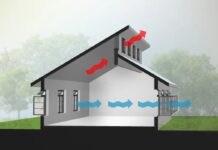
How doors align with windows influences natural airflow. Doors aligned with windows or openings in adjacent rooms create a clear path for fresh air to pass through interior spaces. Poorly aligned doors, especially those opening into dead-end corridors, disrupt airflow, leaving inner rooms stale even with open windows.
Thoughtful door placement can significantly improve cross-ventilation without adding new openings.
Doors and Vertical Airflow
In multi-story buildings, doors affect vertical airflow caused by the “stack effect” – warm air rising through staircases and shafts. Open doors promote vertical ventilation in warm weather, while tightly sealed doors trap heat and moisture. In cold climates, uncontrolled airflow can increase heat loss, so door sealing must be balanced based on climate.
Specific Room Considerations
- Bathrooms: Doors play a critical role in moisture management. Closed doors trap humid air, leading to condensation and mold. Doors with undercuts, louvers, or partial ventilation allow moisture to escape.
- Bedrooms: Closed bedroom doors often lead to poor air quality at night. Without direct ventilation, air exchange is minimal, causing stuffiness. Door undercuts or vents allow continuous airflow while maintaining privacy.
- Sliding vs. Hinged Doors: Sliding doors typically have larger gaps and less airtight sealing, allowing more airflow. Hinged doors with tight frames restrict airflow unless undercuts or vents are provided.
Common Mistakes
Several common mistakes disrupt airflow: installing doors flush with the floor, adding door sweeps without considering ventilation, or adding carpets that block existing undercuts. Using airtight doors in bathrooms or kitchens without mechanical ventilation worsens moisture problems. Poor door placement prevents cross-ventilation even when windows are available.
Using Doors Intentionally
Doors can be used to guide airflow: placing doors opposite windows encourages fresh air movement, and transfer openings above or below doors maintain airflow even when closed.
In warm climates, keeping internal doors open supports whole-house ventilation. In cooler climates, controlled door closure with undercuts helps retain heat while allowing minimal airflow.
Retrofitting for Better Airflow
In existing buildings, simple modifications can significantly improve airflow: trimming door bottoms to create undercuts, installing transfer grilles, or replacing solid bathroom doors with ventilated designs.
Doors aren’t just barriers; they’re active components in a building’s airflow system. Their position, clearance, and type directly influence how air moves between rooms. When doors disrupt airflow, rooms become isolated and uncomfortable. When designed thoughtfully, they support healthy ventilation and improve indoor air quality. Treating door placement as part of the ventilation design leads to better-performing, more comfortable, and more durable buildings.