



Ridgeway, Va., residents are holding their breath. The Shady Rest mobile home park on U.S. 220 used to be an eyesore. Homes sat close together, poorly maintained, surrounded by debris. When the park closed, the neighborhood exhaled. Now, new owner Atul Chumble wants to reopen it. Neighbors are upset again. They fear a repeat of the past. Chumble plans to update the property into a livable community. He told neighbors he dislikes eyesores too. Local officials are watching.
The reaction makes sense. Manufactured home parks have a bad reputation. They are often dismissed as trailer parks. Residents worry about property values, crime, and clutter. They picture junk cars and sagging diapers. But the industry has changed. Most people today could not tell the difference between a manufactured home and a site-built home. New models feature garages, landscaped lawns, and multi-story designs. They include energy-efficient HVAC systems and ENERGY STAR appliances.
More than 17 million Americans live in manufactured homes. What do they know that the rest of us miss?
How Much Cheaper Are Manufactured Homes Than Site-Built?
Affordability is the biggest draw. In 2007, Jim and Debby Laramie bought a 1,720-square-foot modular home in Gulfport, Fla., for $118,000. The median price for a single-family house in Pinellas County was $210,000. They saved $92,000 on a brand-new, modern home.
The gap remains wide. The average cost for a manufactured home is $62,600. A single-family site-built home averages $272,200. Building a manufactured home costs 10 to 35 percent less per square foot than a site-built home.
This pricing attracts middle-class buyers. The median annual income for manufactured home residents is $34,700. However, 24 percent of these households earn $50,000 or more. The average household size is 2.7 people.
Why Does Factory Construction Save Money and Time?
Anyone who has built a house knows the horror stories. Cost overruns. Delays. Difficult contractors. Factory construction eliminates most of that chaos. Homes are built on assembly lines under strict federal regulations. There is little room for error.
The process happens in a controlled environment. Bad weather does not stop production. Vandalism is not a risk. Contractor reliability is consistent. Factories buy materials in bulk. They pass those savings to the homeowner.
Speed matters too. The homeowner handles the foundation and utilities. But the factory builds the structure. A typical double-wide or single-wide home takes about one-third of the time to build compared to a site-built home. When it arrives on your land, it is nearly 90 percent complete. You can move in faster. Safety and building codes are still enforced. Inspectors examine the structure before and after installation.
What Are the Design Options for New Manufactured Homes?
These are not your grandfather’s mobile homes. Designs are elaborate. Modular homes often have multiple stories. They include porches, garages, decks, and vaulted ceilings. You can add lawns and landscaping depending on the lot.
Customization is standard. Want stainless steel appliances? Hardwood floors? Granite countertops? Builders can accommodate. Some companies focus on upscale modular homes. The Modular Center offers a “Masterpiece Collection” with homes ranging from 2,000 square feet to more than 5,000 square feet.
Mobile homes refer to units built before 1976, when building regulations did not exist. Manufactured homes are built to higher standards.
How Energy Efficiency Changes the Long-Term Cost
Energy efficiency is a key advantage. Modern manufactured homes come with systems designed to lower utility bills. This matters for homeowners planning to stay in the property for years.

The real math on utility bills: what the data actually shows
Manufactured homes have moved past the old “cheap and leaky” reputation. Factories now install ENERGY STAR appliances as standard, not as an upsell. The assembly process is tight. Heating and cooling systems are calibrated before the unit ever hits a trailer. Windows are high-performance. Water heaters are efficient.
This precision cuts costs. How much? Enough to matter.
A few years ago, North Carolina A&T University and the U.S. Department of Energy ran a controlled test. They built two identical structures on the Greensboro campus. Both were 1,528 square feet (142 square meters). Both had three bedrooms and three bathrooms. One served as the base house. The other was the energy house, packed with efficient materials and gear.
The homes were empty, so researchers wired up timers to flip lights and run appliances on a typical schedule. They expected the energy house to beat the base house by 50 percent. They tracked both through a full winter heating season and a summer cooling season.
The energy house didn’t just hit that target. It cleared it. The overall savings landed at 55 percent. That is the difference between a factory-built code-compliant unit and one optimized for efficiency. If you are looking at two quotes, ask specifically about the window R-values, the heat pump or furnace efficiency rating, and whether the appliances are certified. The spread in annual utility costs can be significant, especially in climates with extreme temperature swings.
Amenities that used to be site-built only
Walk in and you see wall-to-wall carpet. Maybe hardwood floors in the living area. Ceramic tile in the kitchen. Fixtures that look like they belong in a high-end custom build. Ten-foot ceilings are common in newer models.
It looks like a suburban single-family home. And functionally, it is. The main difference is the installation timeline. In a site-built home, you watch the plumber come in, then the electrician, then the tile setter. In a manufactured home, those workers finished the job inside a factory climate-controlled shop before the unit was transported to your lot.
You can add whatever a site-built buyer would want. Walk-in closets are standard in many layouts. Bathrooms often feature double sinks and sunken tubs. Some units include jetted tubs or soaker bathtubs. Fireplaces, bay windows, and gabled roofs are all available options. The factory just handles the assembly sequence before delivery.
Wind resistance: what the code actually requires
The image is stuck in most people’s heads. A tornado or hurricane sweeps through a manufactured home park. Units get tossed. Debris flies. It looks chaotic.
That perception ignores the current building standards. The U.S. government requires manufactured homes to be built to withstand winds up to 110 mph (177 kph) in areas prone to hurricane-force winds. That is not a suggestion. It is a federal requirement under the HUD Code.
If you are buying in a coastal or tornado-prone region, ask the builder what wind rating the specific unit was certified for. Not every unit is built to the same standard. A unit intended for a mild climate in the Pacific Northwest will have different structural requirements than one heading to the Gulf Coast. The chassis, the floor frame, and the connection points to the foundation all factor into that rating.
You do not have to gamble on the wind rating. You just have to ask for the documentation before you sign.
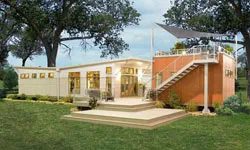
Why manufactured home communities are often the best-kept in town
People assume factory-built homes mean you’re stuck in a trailer park that looks like a post-2008 credit crisis. That’s not how it works anymore. Many manufactured home communities have strict aesthetic guidelines, well-maintained landscaping, and amenities that rival suburban subdivisions.
The key is community standards. When you buy into a manufactured home community, you’re usually signing an agreement that dictates exterior colors, roof styles, and even where you can place satellite dishes. It sounds restrictive, but it actually keeps the neighborhood looking cohesive. No one is painting their home neon orange or stacking scrap metal in the yard.
This structure creates a specific kind of safety and social cohesion. Neighbors know each other. Security is often better because the community is walled or gated, with controlled access points. For homeowners who want to do their own renovations, this is a double-edged sword. You can paint your interior whatever you want, but exterior changes often require approval. Read your community covenants before you start cutting into drywall if you plan to add windows or change siding.
The modular construction advantage for DIY owners
Here is where the “green” angle gets practical for you as a homeowner. Because manufactured and modular homes are built in controlled factory environments, the materials are often higher quality and cut with precision. Less waste means fewer off-cuts for you to deal with if you’re doing renovations.
Warren Buffett’s Clayton Homes division proved this point with their i-house line. Launched in 2009, these 750-square-foot units cost under $75,000 and earned a Platinum LEED rating, the highest possible from the U.S. Green Building Council. They featured low-flow faucets, high-efficiency heat pumps, and roofs designed to harvest rainwater.
Why does that matter for your renovation? If you are considering a manufactured or modular home for a DIY project, the baseline energy efficiency is often better than in an older stick-built house. You aren’t starting from zero. You aren’t replacing a 40-year-old furnace with a new one before you even touch the kitchen. The infrastructure is newer, the insulation is tighter, and the electrical systems are likely up to code.
This gives you a bigger budget for the things you actually enjoy doing. Instead of spending $10,000 on a new HVAC system, you can spend that money on custom cabinetry, hardwood flooring, or a proper tile job in the bathroom. The factory precision means your walls are straighter, which makes hanging drywall and taping corners significantly less frustrating.
What to look for in a green manufactured home
When shopping, don’t just look for the word “eco-friendly” on a brochure. Ask for specific data points:
- LEED certification level. Platinum is the gold standard, but even a Silver or Gold rating indicates meaningful energy savings.
- Heat pump efficiency. Look for units with high SEER ratings. These save on electricity bills year-round.
- Water harvesting systems. If the home is in a dry climate, a rainwater collection system can significantly reduce your water bill.
- Insulation type. Closed-cell spray foam is common in high-end modular homes. It provides better R-value than traditional fiberglass batts and seals air leaks more effectively.
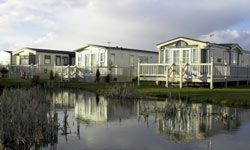
Why Renting the Lot Beats Managing Your Own Yard
Most people picture a trailer park and immediately think “squalor.” That’s a fair assumption, but it doesn’t match reality for a lot of folks. Over 75% of manufactured homes actually sit on private property. The other 25%? Those are in communities where you lease the lot. If you go the lease route, you hand over some control, but you also hand over the headache.
You don’t mow. You don’t shovel. You don’t fix the gutters when they clog. The community handles lawn maintenance, trash removal, snow plowing, and on-site repairs. That is a massive time-saver, especially if you are older or just tired of yard work.
Some of these places are gated and secure. Others, particularly 55+ communities, feel more like a small resort. You will find walking trails, fitness centers, pools, tennis courts, and sometimes even golf courses. The landscaping is usually taken care of, and the common areas keep things lively. It’s less like living in a house and more like living in a managed campus with a house attached.
Do Manufactured Homes Actually Hold Their Value?
There is a persistent myth that manufactured homes only depreciate. People assume they lose money every year you own them. That’s not how it works. If you build it right and maintain it, a manufactured home appreciates just like a site-built house. It follows the same rules as any other housing market.
Value depends on a few specific things:
– The local housing market conditions
– The specific community you are in
– What you paid initially
– Inflation rates
– The age of the unit
– Its overall condition
– The exact location
One of the biggest fears is that these homes drag down neighboring property values. Studies say otherwise. Back in 1993, researchers at the University of Michigan looked at this exact issue. They found that manufactured homes had little to no negative impact on the values of site-built homes in adjacent neighborhoods.
If you need a bigger name to trust the investment angle, look at Warren Buffett. In 2003, his company, Berkshire Hathaway, bought Clayton Homes Inc., a manufacturer based in Knoxville, Tenn., for $1.7 billion. Buffett didn’t do that for a charity project. In his 2011 investor letter, he suggested his company should serve as a model for housing reform. He sees long-term value where others see scrap.
Getting the Warranty Right (So You Don’t Get Stuck)
Remember the last time something broke in your house? You had to chase a contractor. They were slow. The fix was late. It was a hassle. Manufactured homes change that dynamic because they come with built-in protection.
New units generally come with a one-year construction warranty. But that’s not all. You get separate warranties for windows, doors, siding, faucets, and appliances. Most builders will offer extended warranties if you want them. It’s a different experience than dealing with a random local handyman who vanished after the deposit.
If you are buying used, the warranty situation gets tricky. You might have no coverage at all. Before you sign anything, you need to ask direct questions:
– How long does the warranty last?
– What exactly does it cover?
– What actions void the warranty?
– Who does the work: the retailer, the builder, or the installer?
– Does the warranty die if the installation site wasn’t prepared correctly?
Here is the trap. People sign off on a summary document and think they’re protected. They are not. Make sure you hold a copy of the complete warranty document, not a blurb. And if the warranty requires renewal, keep it current. If you let it lapse, you are on your own when the roof leaks in February.
Quick Answers on Costs, Quality, and Placement
People have specific questions about where these homes go and what they cost. Here is the reality check.
Can you put a manufactured home anywhere?
No. You have to follow federal, state, and local regulations. You can place one on land you own, or in a manufactured home community. You can’t just drop it in a rural field without checking zoning laws.
What is the difference between modular and manufactured homes?
Manufactured homes are built in a factory and shipped to the site in one piece on their own frame or chassis. Modular homes are built in sections and transported on flatbed trucks. Modular units tend to be more customizable because they are assembled like a site-built house after delivery.
How much does one cost?
The average manufactured home costs about $62,600. A single-family site-built home averages $272,200. That is a gap that makes homeownership accessible for people who couldn’t afford a traditional build.
Is it cheaper to build or buy?
Buying manufactured is usually cheaper. You save 10 to 35 percent per square foot compared to site-built construction. That efficiency comes from the factory setting, where waste is lower and labor is streamlined.
Who makes the best ones?
Quality varies, but several names stand out. Kit Custom Homes, Sunshine Homes, Deer Valley Homebuilders, and Fleetwood Homes are frequently cited as top choices. Champion Home Builders and Clayton Homes are also well-known and reputable in the industry.